
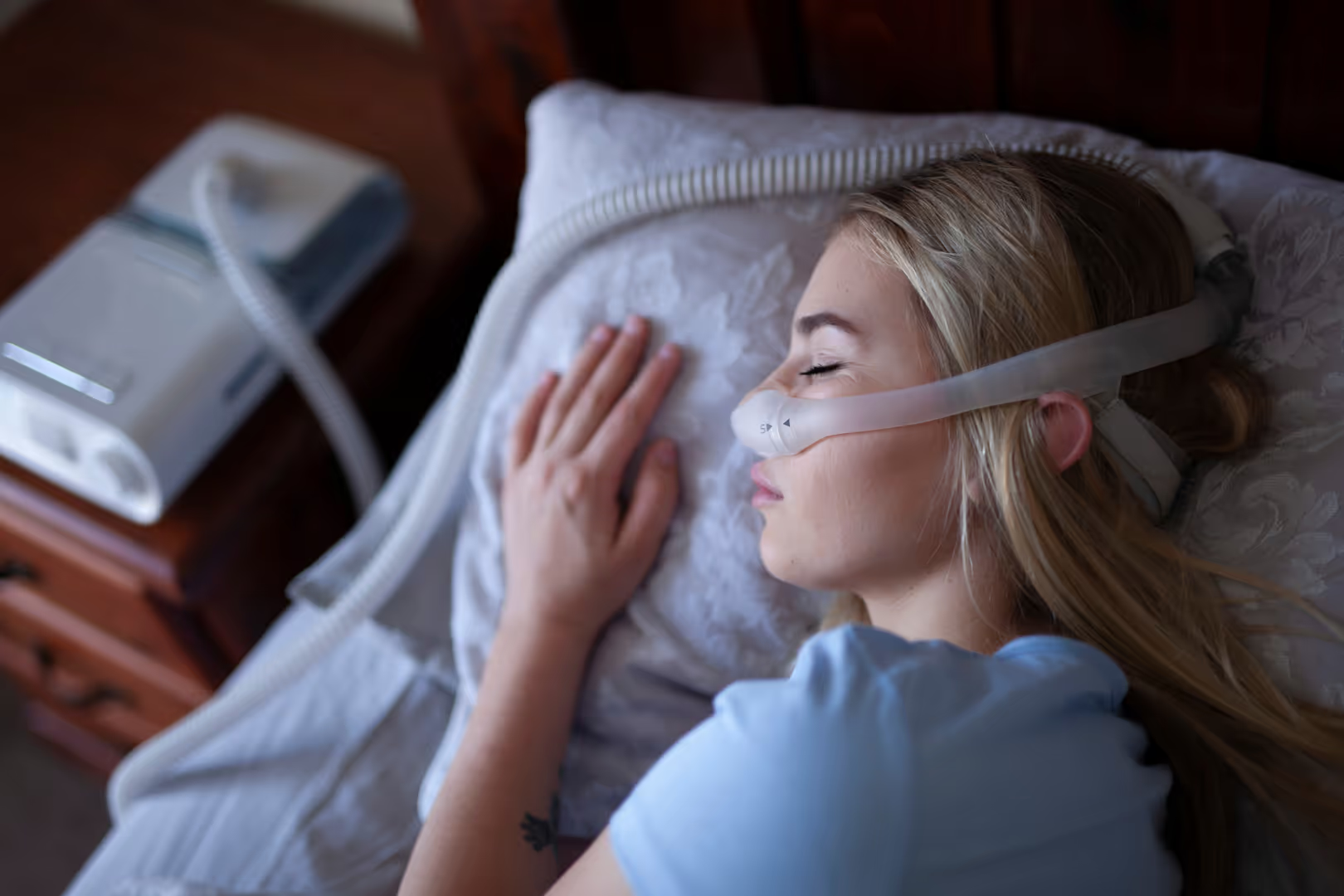
If you snore, wake up tired, or have been told you stop breathing in your sleep, you are not alone, and you do not have to just live with it. At Magnolia Mountain Dentistry in Asheville, we look at how your mouth, jaw, and airway affect your sleep, and we work with you and your physician to find a plan that fits.
Signs You Might Have Sleep-Disordered Breathing
- Loud or frequent snoring
- Waking up gasping or with a dry mouth
- Morning headaches or ongoing daytime tiredness
- Grinding or clenching your teeth at night
- A partner who notices pauses in your breathing
How a Dentist Can Help
Sleep apnea is diagnosed by a physician, usually through a sleep study. A dentist can still play a big role. We can screen your airway, including with acoustic pharyngometry, look for signs in the mouth and jaw, and coordinate with your doctor. For many patients with mild to moderate sleep apnea, or those who cannot tolerate a CPAP machine, a custom oral appliance is one option to discuss with their physician.
What to Expect at Your Visit
- We talk through your symptoms, sleep habits, and health history.
- We examine your mouth, jaw, and airway, and may use a quick, non-invasive screening.
- We explain what we found and whether a sleep study or physician referral makes sense.
- If an oral appliance is appropriate, we walk you through the process and follow up with your doctor.
Nervous about dental visits? Ask about sedation dentistry, or contact us to schedule a visit.
What is Sleep Apnea Treatment?
Sleep apnea affects millions of people worldwide and can have a serious impact on your quality of life. Most often, being overweight, obese or having other respiratory issues can increase your chances of developing sleep apnea. The condition is caused by the soft tissues at the very back of the throat relaxing and covering the airway. This results in loud snoring and cessations in your breathing throughout the night, which causes you to continually wake up to catch your breath. We offer a simple oral device appliance that opens the airway, eliminating sleep apnea symptoms.
Why might Sleep Apnea Treatment be needed?
Sleep apnea is a medical condition that can seriously impact your way of life. Because you're not sleeping properly, you'll find that you are too exhausted to do anything throughout the day. You may even find yourself falling asleep on the job or when trying to spend time with your loved ones. The loud snoring at night can even be disruptive to your loved ones, causing them to stay awake as well.
Who is a candidate for Sleep Apnea Treatment?
Patients with more mild sleep apnea symptoms can often benefit from the oral device that we make for them in the office. This device works by opening the airway, which makes it easier for you to breathe while you sleep. We will go over your health and medical history to ensure that treatment is right for you. If you have sleep apnea, it is important to consider treatment to improve your quality of life.
What happens during Sleep Apnea Treatment?
We will take impressions of your mouth and teeth. These molds are then used to make the appliance that you'll wear. You will come into the office to have the appliance fitted and adjusted as needed. You should wear the device each night in order for it to work effectively at treating your sleep apnea. We can then replace the device as it begins to wear or become damaged. Sleep apnea patients find that these oral devices are incredibly comfortable and highly effective at treating the condition.
If you want to learn more about sleep apnea treatment, call us today so that our helpful staff members can answer all of your questions.
Sleep Apnea FAQs
Can a Dentist Treat Sleep Apnea?
A dentist cannot diagnose sleep apnea, but a dentist can screen for airway concerns, work with your physician, and provide oral appliance therapy when it is appropriate.
Is There an Alternative to a CPAP Machine?
For some patients, a custom-fitted oral appliance may be an option. It depends on the type and severity of your sleep apnea, so your physician needs to be part of the decision.
What Causes Snoring?
Snoring happens when airflow is partly blocked as you sleep. Common causes include relaxed throat tissue, nasal congestion, jaw position, weight, and sleep position. Loud, frequent snoring can be a sign of sleep apnea and is worth mentioning to your doctor.
Does Insurance Cover Sleep Apnea Treatment?
Coverage varies. Some medical plans cover oral appliances when a sleep study confirms sleep apnea. We can help you understand what to ask your insurance provider.